You've heard it a thousand times: "Video is the future of marketing." But if you're a small business owner staring at your marketing budget and wondering whether to invest in video, you don't need more hype. You need numbers.
Is video marketing actually worth the money, the time, and the effort? Or is it just another shiny object that agencies push to inflate their invoices?
Let's cut through the noise and look at the real ROI of video marketing for small businesses. Not theory. Not vibes. Actual data, real-world examples, and a framework you can use to decide whether video makes sense for your business right now.
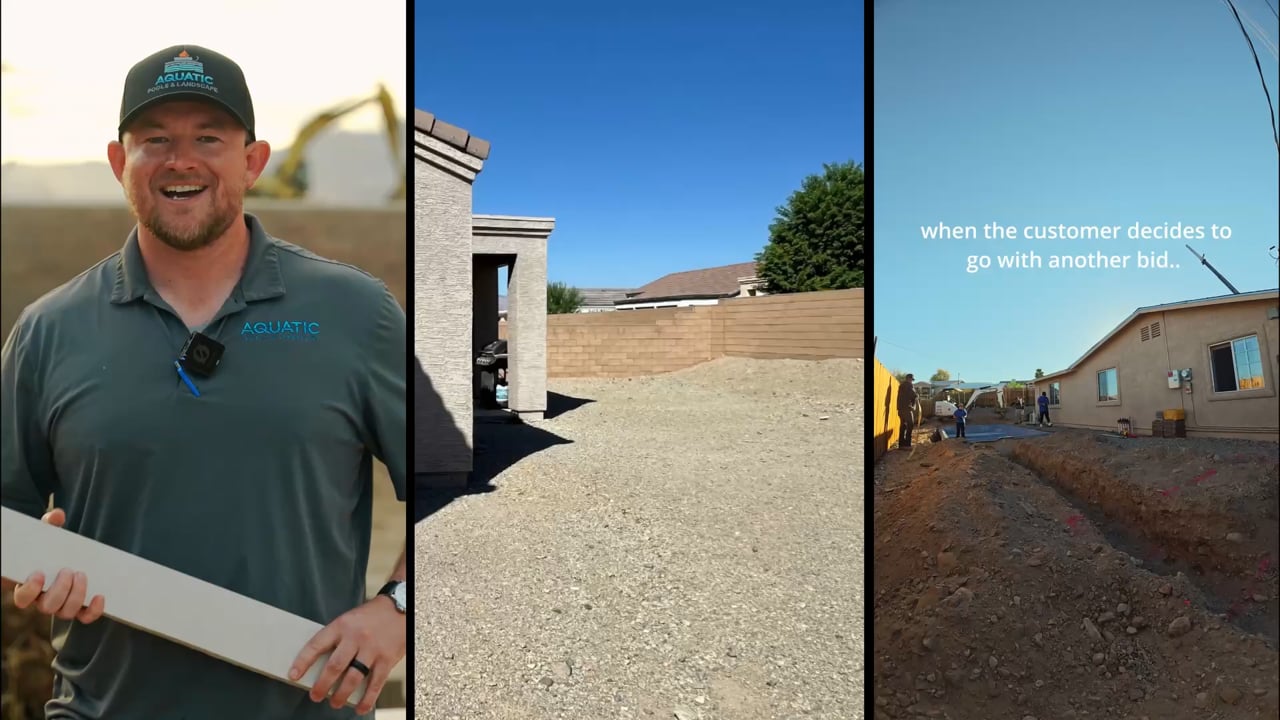
If you want a single worked example, the $10.4M contractor pipeline case in our construction guide shows the whole chain from footage to booked jobs.
The Numbers Don't Lie
Before we get into strategy, here are three stats that every business owner sitting on the fence needs to see:
of marketers say video helps them generate leads
more shares than text and image content combined
increase in conversion rates when video is on a landing page
These aren't cherry-picked numbers from some obscure study. They come from Wyzowl, HubSpot, and Unbounce research that's been replicated year after year. Video consistently outperforms every other content format for engagement, shareability, and conversion.
But stats are one thing. The real question is: what does this look like for a business like yours?
How to Actually Measure Video Marketing ROI
Most businesses fail at video marketing not because the content is bad, but because they have no idea how to measure whether it's working. They post a video, check the views, and either celebrate or panic. That's not a measurement strategy.
Here's the framework we use at Maken Media to track ROI across every client:
1. Views and Reach
This is the top of the funnel. How many people are seeing your content? Views alone don't pay the bills, but they tell you whether the algorithm is picking up your content and whether your hooks are working. If you're consistently getting under 500 views, the problem is usually the first 2 seconds of your video or your posting consistency, not video marketing itself.
2. Engagement Rate
Likes, comments, shares, and saves. This tells you whether your content is resonating with the people who see it. A video with 10,000 views and 50 likes is wallpaper. A video with 2,000 views and 200 saves is a sales machine. Engagement — especially shares and saves — is where the real signal lives.
3. Leads Generated
How many people are DMing you, clicking the link in your bio, filling out a contact form, or booking a call after watching your videos? This is the metric that separates "brand awareness" from actual business results. Track this monthly. If your videos aren't generating any leads after 60-90 days of consistent posting, something in your strategy needs to change — usually the call-to-action.
4. Sales and Revenue
The bottom line. How many of those leads converted into paying customers, and what's the total revenue attributable to video? For service businesses, even one or two closed deals from video content can represent a massive return. If you spend $2,000/month on video production and close one $15,000 project from a lead that found you through Instagram, that's a 650% ROI.
The best way to measure video ROI is to ask every new lead: "How did you find us?" You'd be surprised how often the answer is "I saw your videos on Instagram" or "I've been following you on TikTok for months."
The Three Objections (And Why They're Wrong)
We've worked with hundreds of businesses across every industry. From pool companies to med spas to SaaS startups to restaurants. The objections are always the same. Let's address them honestly.
"It's Too Expensive"
Compared to what? A single direct mail campaign can cost $5,000+ and get thrown in the trash. A billboard costs $3,000-$10,000/month and you can't measure a single thing. Video content lives forever, gets shared organically, and compounds over time. A video you post today can generate leads 6 months from now.
"We Don't Have Time"
You don't need to post every day. Two to three videos per week, filmed in a single 2-hour batch session per month, is enough to build serious momentum. Or hire an agency to handle it. Either way, the time excuse evaporates once you see the first deal close from a video lead.
"Our Industry Is Boring"
No industry is boring. Boring industries are actually the biggest opportunity because nobody else is making content. A plumber showing a before/after of a trashed water heater gets millions of views. An accountant explaining tax loopholes goes viral. "Boring" is a content strategy problem, not an industry problem.
"We Tried It — Didn't Work"
You probably posted 5 videos with no strategy, no hooks, no CTAs, and no consistency — then decided "video doesn't work for us." That's not a fair trial. You wouldn't run one Facebook ad, get no results, and say digital advertising is dead. Video needs a system, not random acts of content.
Real-World ROI: What This Actually Looks Like
Let's walk through some real scenarios that illustrate the math behind video marketing ROI.
Scenario 1: The Local Service Business
A landscaping company invests $1,500/month in video content — 8-10 short-form videos filmed in one shoot day. They post consistently on Instagram and TikTok. Within 90 days, they're averaging 15,000 views per video and getting 3-5 inbound DMs per week from potential customers. Their average job is $4,000. If they close just two of those leads per month, that's $8,000 in revenue from $1,500 in video spend — a 433% ROI.
Scenario 2: The E-Commerce Brand
An online supplement brand creates product demonstration videos and UGC-style content. They spend $2,000/month on production and repurpose the videos as paid ads. Their cost-per-acquisition drops from $45 to $22 because video ads outperform static image ads. On 500 monthly purchases, that's a savings of $11,500/month — and that doesn't count the organic reach from posting the same content on social.
Scenario 3: The B2B Consultant
A business consultant posts weekly educational videos on LinkedIn. No fancy production — just a phone, a ring light, and strong talking points. After 6 months, they've built an audience of 8,000 followers and consistently get 2-3 discovery calls per week from people who watched their content. Their average client contract is $25,000. Even closing one new client per quarter from video means $100,000/year from essentially free content production.
These aren't outliers. This is what happens when you combine good content with consistency and an actual strategy. The compounding effect of video is unlike any other marketing channel.
Ready to See Real ROI from Video?
Let's build a video strategy that actually drives leads and revenue — not just views.
Book a Strategy CallHow to Start Small and Scale
You don't need to go from zero to a full production studio overnight. Here's how to test video marketing without betting the farm:
Start with your phone.
Modern smartphones shoot better video than professional cameras from 10 years ago. Good lighting (even a $30 ring light) and clear audio (a $20 lapel mic) are all you need. Don't let "I need better equipment" stop you from starting.
Commit to 30 days.
Post 3-4 videos per week for one month. That's your minimum viable test. Track views, engagement, and any inbound leads. Don't judge video marketing by 3 posts — judge it by 30.
Study what works in your industry.
Find 5 competitors or industry leaders who are already doing well on video. What formats are they using? What topics get the most views? Adapt their playbook instead of guessing from scratch.
Add a CTA to every single video.
"DM me the word INFO for details." "Link in bio to book a free consultation." "Comment GUIDE and I'll send it to you." If your videos don't tell people what to do next, they'll just scroll to the next one.
Evaluate at 90 days, then scale.
After 3 months of consistent posting, you'll have enough data to know whether video is generating real business results. If it is, that's when you invest in better production, more volume, or an agency to take it off your plate entirely.
The businesses that win with video are not the ones with the biggest budgets. They're the ones that start before they're ready, stay consistent when it feels like nobody's watching, and double down when the data says it's working.
Download Our Video Marketing ROI Calculator
Plug in your numbers and see exactly what video marketing could return for your business. Includes monthly lead projections, revenue estimates, and ROI comparisons to other marketing channels.
Download ROI CalculatorThe Bottom Line
Is video marketing worth it? The data says yes. The case studies say yes. The businesses that are growing fastest on every platform right now say yes.
But the real answer depends on one thing: are you willing to commit to a system and give it enough time to work?
Video marketing is not a lottery ticket. It's a compounding investment. The first 30 days might feel slow. The first 90 days will start to show traction. By 6 months, you'll wonder why you didn't start sooner.
Every day you wait is a day your competitors are building an audience, generating leads, and closing deals from content that you could be making.
If you want help building a video strategy that actually drives ROI — not just views — let's talk.